
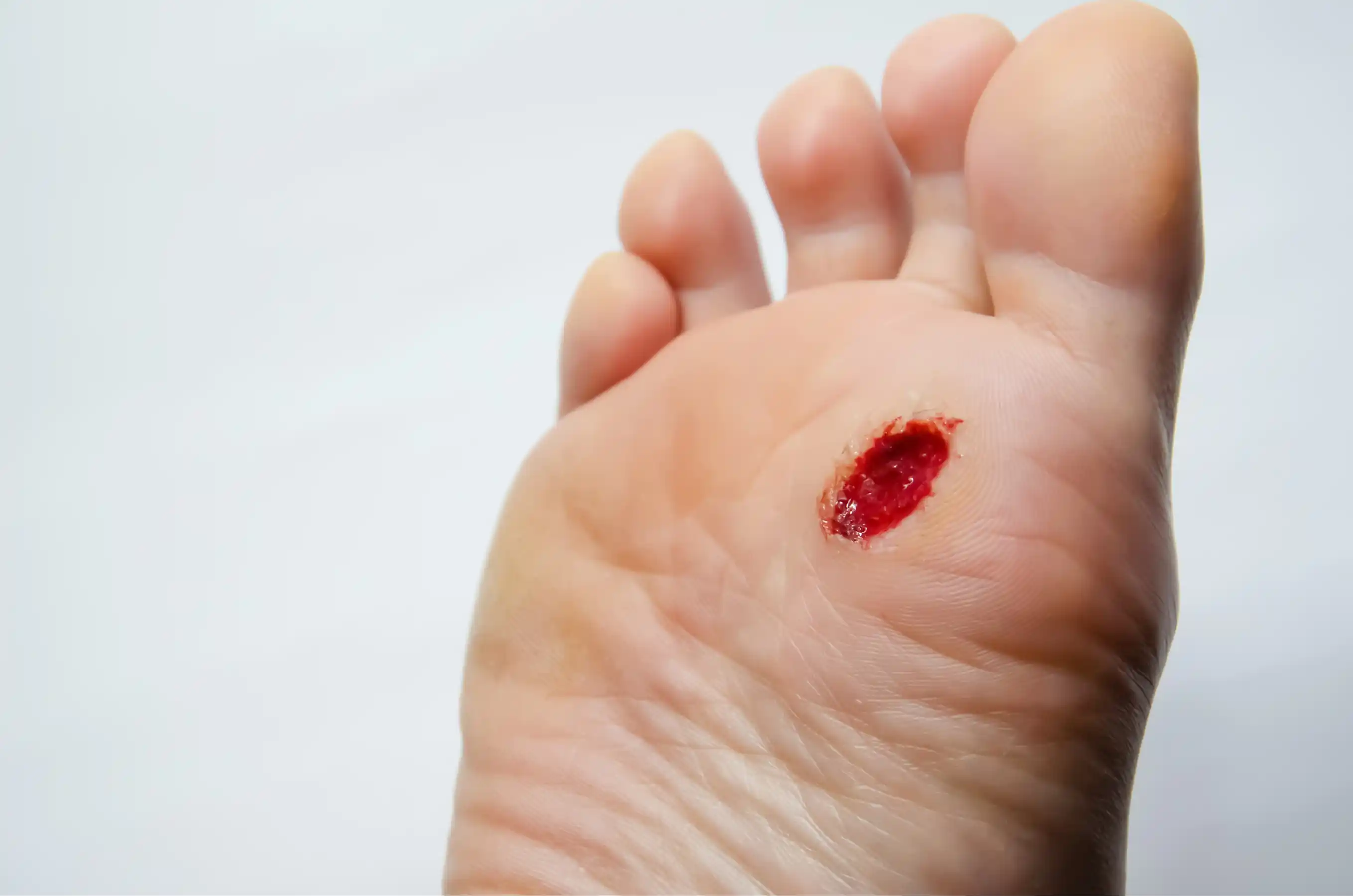
Key Takeaways
- See a wound care specialist if a foot wound stops improving, shows signs of infection, or belongs to someone with diabetes or poor circulation.
- Redness, swelling, pus or other drainage, and pain that gets worse are signs a wound needs a professional look.
- Diabetes and poor blood flow can make small cuts and blisters heal slowly and become infected more easily.
- Waiting too long can let a minor wound turn into a deeper sore or infection that takes longer to treat.
- Greater Austin Podiatry Associates provides expert foot wound care for patients across Austin and central Texas, and you can request an appointment online with Greater Austin Podiatry Associates as soon as a wound concerns you.
Why Foot Wounds Need Extra Attention?
Most small scrapes and blisters heal well with gentle cleaning and a clean bandage. Feet, however, face challenges that other parts of the body don't:
- They carry your full body weight all day.
- Shoes and socks rub against the same spots again and again.
- The bottoms of your feet are hard to see, so changes can go unnoticed.
Because of this, a wound on the foot can take longer to heal than the same wound on your arm or hand. Knowing what normal healing looks like, and what it doesn't, helps you decide when home care is enough.
Signs a Foot Wound Is Not Healing on Its Own
According to MedlinePlus, the National Library of Medicine's guide to wound care centers, a wound may be considered non-healing if it:
- Has not started to heal in 2 weeks.
- Has not completely healed in 6 weeks.
You don't need to wait that long if something already seems off. Watch for these changes:
- The wound looks the same, or bigger, after several days.
- The skin around it stays red or puffy.
- It keeps draining fluid instead of drying and closing.
- Walking on it hurts more over time instead of less.
Signs of Infection to Watch For
MedlinePlus lists these signs of infection as reasons to contact a provider:
- Redness
- Swelling
- Pus or bleeding from the wound
- Pain that gets worse
- Fever
- Chills
If you have a fever or chills along with a foot wound, contact a healthcare provider right away. If you feel very ill or symptoms are getting worse quickly, go to the nearest emergency room.
Special Risk Factors: Diabetes and Poor Circulation
Some people need to take foot wounds more seriously than others. Diabetes and poor circulation (reduced blood flow) are the two biggest reasons.
How Diabetes Affects Foot Wounds?
The Centers for Disease Control and Prevention (CDC) guide to your feet and diabetes explains that about half of all people with diabetes have some kind of nerve damage, most often in the feet and legs. Nerve damage can make it hard to feel pain, so a cut or blister may go unnoticed.
The CDC also notes that nerve damage and poor blood flow can lead to a foot ulcer, which is an open sore or wound. With diabetes, an ulcer can become infected and may not heal well.
Why Diabetic Foot Wound Care Can't Wait?
The American Diabetes Association (ADA) overview of foot complications advises that every foot ulcer should be seen by a doctor right away, even ulcers that don't hurt. The ADA also explains that poor circulation makes the foot less able to fight infection and heal.
If you have diabetes, diabetic foot wound care from a specialist is the safest choice for any wound that isn't clearly getting better.
Minor Foot Wound vs. a Wound That Needs a Specialist
Use this table as a quick guide. When in doubt, have the wound checked.
| What You Notice | Likely Fine to Watch at Home | Time to See a Wound Care Specialist |
|---|---|---|
| Size over time | Getting smaller each day | Staying the same or getting bigger |
| Skin around the wound | Mild pinkness that fades | Redness or swelling that stays or spreads |
| Drainage | Little or none, drying out | Pus, cloudy fluid, or steady drainage |
| Pain | Easing day by day | Getting worse instead of better |
| Your health history | No diabetes or circulation problems | Diabetes, poor circulation, or past foot ulcers |
| Timeline | Clear progress within days | No healing started after 2 weeks |
How Delaying Care Can Lead to Complications
A small wound that is left alone can grow into a much bigger problem. Delayed care can lead to:
- Deeper infection: Germs can spread from the skin into deeper tissue.
- Foot ulcers: A blister or cut can break down into an open sore, especially with diabetes.
- Longer recovery: Wounds that are treated late often need more visits and more advanced care.
The CDC explains that if an infection in a diabetic foot ulcer does not improve with treatment, part of the toe, foot, or leg may need to be removed (amputated) to keep the infection from spreading. The good news is that the CDC also says checking your feet daily and getting early treatment greatly lowers this risk.
When to Schedule a Same-Day or Next-Day Evaluation?
Greater Austin Podiatry Associates offers same-day and next-day appointments for patients who need prompt care. The practice also runs a Monday morning walk-in clinic in Kyle from 8:00 a.m. to 12:00 p.m., with no appointment needed.
Consider a same-day or next-day visit if:
- You have diabetes and notice any new cut, blister, or sore on your foot.
- A wound shows redness, swelling, drainage, or worsening pain.
- You stepped on something and the wound is deep or hard to clean.
- A wound has not started healing after about 2 weeks.
What Happens at a Wound Care Visit at Greater Austin Podiatry Associates?
At your first visit, the team examines the wound, reviews your medical history, and creates a care plan made for you. Depending on your needs, that plan may include:
- Debridement: Gently removing dead or damaged tissue so healthy tissue can heal.
- Advanced dressings: Special wound coverings that protect the area and support healing.
- Wound grafting: Skin substitutes or skin grafts for wounds that don't respond to standard care.
Learn more about the full range of options on the Greater Austin Podiatry Associates wound care and grafts page.
Get a Slow-Healing Foot Wound Checked Before It Gets Worse
A foot wound that isn't improving, shows signs of infection, or affects someone with diabetes deserves a specialist's attention. Greater Austin Podiatry Associates helps patients across Austin and central Texas heal faster and avoid bigger complications.
Ready to get answers? Request an appointment online with Greater Austin Podiatry Associates for expert foot wound care and diabetic wound treatment.
Frequently Asked Questions
When should I see a wound care specialist for a foot wound?
See a wound care specialist if your wound hasn't started to heal within 2 weeks, shows signs of infection, or keeps draining. If you have diabetes or poor circulation, have any new foot wound checked promptly.
Where can I find a wound care specialist near me in the Austin area?
Greater Austin Podiatry Associates provides wound care for patients across Austin and central Texas from its office at 1180 Seton Parkway, Suite 300, in Kyle. You can request an appointment online or visit the Monday morning walk-in clinic.
What does foot infection treatment involve?
Treatment depends on how serious the infection is. It may include cleaning the wound, removing damaged tissue, special dressings, and medicine prescribed by your provider. Your podiatrist will also look for the cause, such as pressure from shoes or reduced blood flow.
Is diabetic foot wound care different from regular wound care?
Yes. Diabetes can reduce feeling and blood flow in the feet, so wounds may heal more slowly and get infected more easily. Diabetic foot wound care focuses on preventing infection, taking pressure off the wound, and close follow-up.
Do I need a referral to be seen?
Some insurance plans require a referral or prior approval. Call Greater Austin Podiatry Associates at (737) 286-9009 so the team can check your coverage before your visit.
