
Key Takeaways
- Diabetes can damage nerves and reduce blood flow in the feet, so small injuries can become serious before you notice them.
- Checking your feet every day is one of the simplest ways to catch problems early.
- Daily habits like washing and drying your feet, wearing well-fitting shoes, and never going barefoot help prevent diabetic foot ulcers.
- Numbness, tingling, color changes, or any sore that won't heal are reasons to see a podiatrist right away.
- Greater Austin Podiatry Associates provides diabetic foot care and wound treatment for patients across Austin and central Texas, and you can request an appointment online with Greater Austin Podiatry Associates to schedule your yearly foot exam.
American Diabetes Month: A Reminder to Check Your Feet
Every November, the American Diabetes Association (ADA) marks American Diabetes Month to raise awareness about the disease. According to the ADA, nearly one in two Americans has diabetes or prediabetes.
Blood sugar, diet, and medicine often get most of the attention in a diabetes plan. Your feet deserve a place on that list too. Diabetes can affect your feet in ways you may not see or feel until a problem is already underway.
Why Diabetes Increases the Risk of Foot Complications?
Diabetes affects your feet in three main ways. Each one makes the next problem more likely.
Nerve Damage: When You Can't Feel an Injury?
Diabetic neuropathy is nerve damage caused by diabetes. The Centers for Disease Control and Prevention (CDC) guide to your feet and diabetes reports that about half of all people with diabetes have some kind of nerve damage, most often in the feet and legs.
Some people feel numbness, tingling, or pain. Others have no symptoms at all. Either way, nerve damage can make it hard to feel a cut, blister, or pebble in your shoe.
Poor Circulation: When Healing Slows Down
The ADA's guide to diabetes foot complications explains that diabetes causes the blood vessels in the feet and legs to narrow and harden. With less blood flow, your feet have a harder time fighting infection and healing.
Foot Ulcers: When Small Problems Grow
A foot ulcer is an open sore on the foot. When you can't feel an injury and your body heals more slowly, a minor blister or callus can break down into an ulcer. The ADA notes that ulcers most often form on the ball of the foot or the bottom of the big toe.
Daily Foot Habits That Support Long-Term Foot Health
Good diabetic foot care takes just a few minutes a day. The CDC and ADA recommend these habits:
- Check your feet every day. Look for cuts, redness, swelling, sores, blisters, corns, or calluses. Use a mirror or ask a family member to help you see the bottoms of your feet.
- Wash your feet daily in warm (not hot) water, then dry them completely, including between your toes.
- Moisturize the tops and bottoms of your feet, but not between your toes.
- Wear shoes and socks at all times, even indoors. Check inside your shoes for small objects before putting them on.
- Choose shoes that fit well and don't rub. The CDC suggests shopping for shoes at the end of the day, when your feet are largest.
- Trim toenails straight across and smooth sharp edges with a nail file.
Habits to Avoid
- Don't walk barefoot, even at home.
- Don't soak your feet, which can dry out your skin.
- Don't cut corns or calluses yourself or use chemical removers.
- Don't use heating pads or hot water bottles on your feet, since you may not feel a burn.
- Don't smoke. The ADA notes that smoking reduces blood flow to the feet and slows wound healing.
Home Care vs. Podiatry Care for Diabetic Feet
Your daily routine and your podiatrist work together. Here's how the jobs are divided.
| Foot Care Need | What You Can Do at Home | How a Podiatrist Helps |
|---|---|---|
| Spotting problems | Check your feet every day | Complete yearly exam that checks feeling and blood flow |
| Toenails | Trims straight across if you can see and reach your feet | Trims nails safely if you have trouble seeing or reaching them |
| Corns and calluses | Watch for changes and report them | Treats them safely without risk of cuts or burns |
| Shoes and support | Wear well-fitting shoes and socks | Recommends footwear or custom orthotics to reduce pressure |
| Cuts, blisters, and sores | Keep clean and covered, then call your doctor | Provides wound care to prevent infection and speed healing |
Warning Signs That Need Prompt Attention
The CDC advises that you don't wait for your next appointment if you notice any of these symptoms:
- Tingling, burning, or pain in your feet
- Loss of feeling, or trouble sensing heat or cold
- Pain or cramping in your legs during activity
- A change in the shape, color, or temperature of your feet
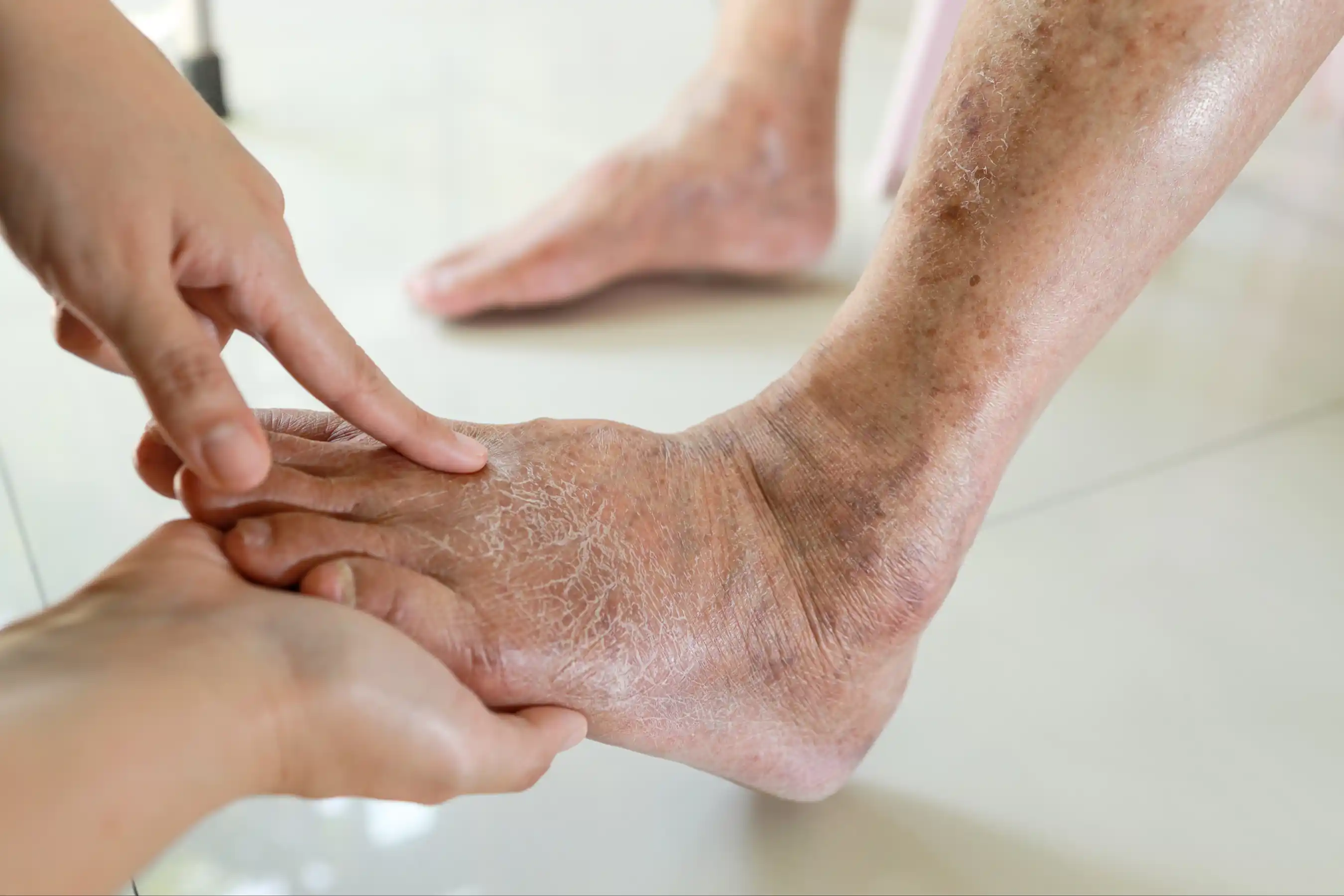
- Dry, cracked skin
- Thickened, yellow toenails or fungus between your toes
- A blister, sore, ulcer, infected corn, or ingrown toenail
For any open sore, the ADA recommends seeing a doctor right away, even if it doesn't hurt.
Why Routine Visits With a Podiatrist for Diabetic Feet Matter?
The CDC recommends a complete foot exam with a foot doctor every year, and more often if you have nerve damage. Regular visits help:
- Catch nerve damage and circulation changes early.
- Treat small issues like calluses or ingrown nails before they lead to sores.
- Build a personal diabetic foot ulcer prevention plan.
- Give you a trusted team to call the moment something changes.
At Greater Austin Podiatry Associates, diabetic foot care and diabetic wound treatment are part of the practice's everyday work. The team also offers same-day and next-day appointments when a problem can't wait.
Make Your Feet Part of Your Diabetes Plan This November
Diabetes can quietly affect the nerves and blood flow in your feet, but daily checks and regular podiatry visits go a long way toward preventing serious problems. Greater Austin Podiatry Associates helps patients across Austin and central Texas protect their feet for the long term.
Request an appointment online with Greater Austin Podiatry Associates to schedule a diabetic foot exam or get care for a sore that isn't healing through the practice's wound care and graft services.
Frequently Asked Questions
How does diabetes affect foot health?
Diabetes can damage the nerves in your feet and reduce blood flow. This makes injuries harder to feel and slower to heal, which raises the risk of sores and infections.
What does good diabetic foot care look like each day?
Check your feet every day, wash and dry them well, moisturize the tops and bottoms, and always wear well-fitting shoes and socks. Report any cuts, sores, or color changes to your doctor.
How can I prevent a diabetic foot ulcer?
Diabetic foot ulcer prevention starts with daily foot checks, good blood sugar control, and shoes that don't rub. Never go barefoot, don't remove calluses yourself, and see a podiatrist at least once a year.
How often should I see a podiatrist for diabetic feet?
The CDC recommends a complete foot exam every year, and more often if you have nerve damage. Your podiatrist may suggest a different schedule based on your needs.
American Diabetes Month is held every November by the American Diabetes Association to raise awareness about diabetes and its effects. It's a good time to schedule your yearly foot exam.
